gomen nasai gomen nasai
ごめんなさい ごめんなさい
I'm sorry, I'm sorry
- ごめんなさい /gomen nasai/:I'm sorry
sono hitokoto sura nouri ni wa nakute
その一言すら脳裏には無くて
Not even that one word came to mind
- 一言 /hitokoto/:one word, a single remark
- すら /sura/:even (emphatic particle)
- 脳裏 /nouri/:mind, back of one's mind
- 無くて /nakute/:not existing; Original form: 無い (to not exist)
kiete yo kiete yo
消えてよ 消えてよ
Disappear, disappear
- 消えて /kiete/:to disappear; Original form: 消える
ima sugu ni soko kara satte shimatte yo
今すぐにそこから去ってしまってよ
Just leave from there right now
- 今 /ima/:now
- すぐに /sugu ni/:immediately, right away
- そこ /soko/:there
- 去って /satte/:to leave; Original form: 去る
- しまって /shimatte/:indicates completion of action; Original form: しまう (te-form of てしまう)
itsu datte watashi dake no tokken da to
何時だって私だけの特権だと
It was always my exclusive privilege
- 何時だって /itsu datte/:always, no matter when
- 私 /watashi/:I, me
- だけ /dake/:only, just
- 特権 /tokken/:privilege, special right
utagatta koto nai kara
疑ったこと無いから
I never once doubted it
- 疑った /utagatta/:doubted; Original form: 疑う (to doubt)
- 無い /nai/:not existing, none
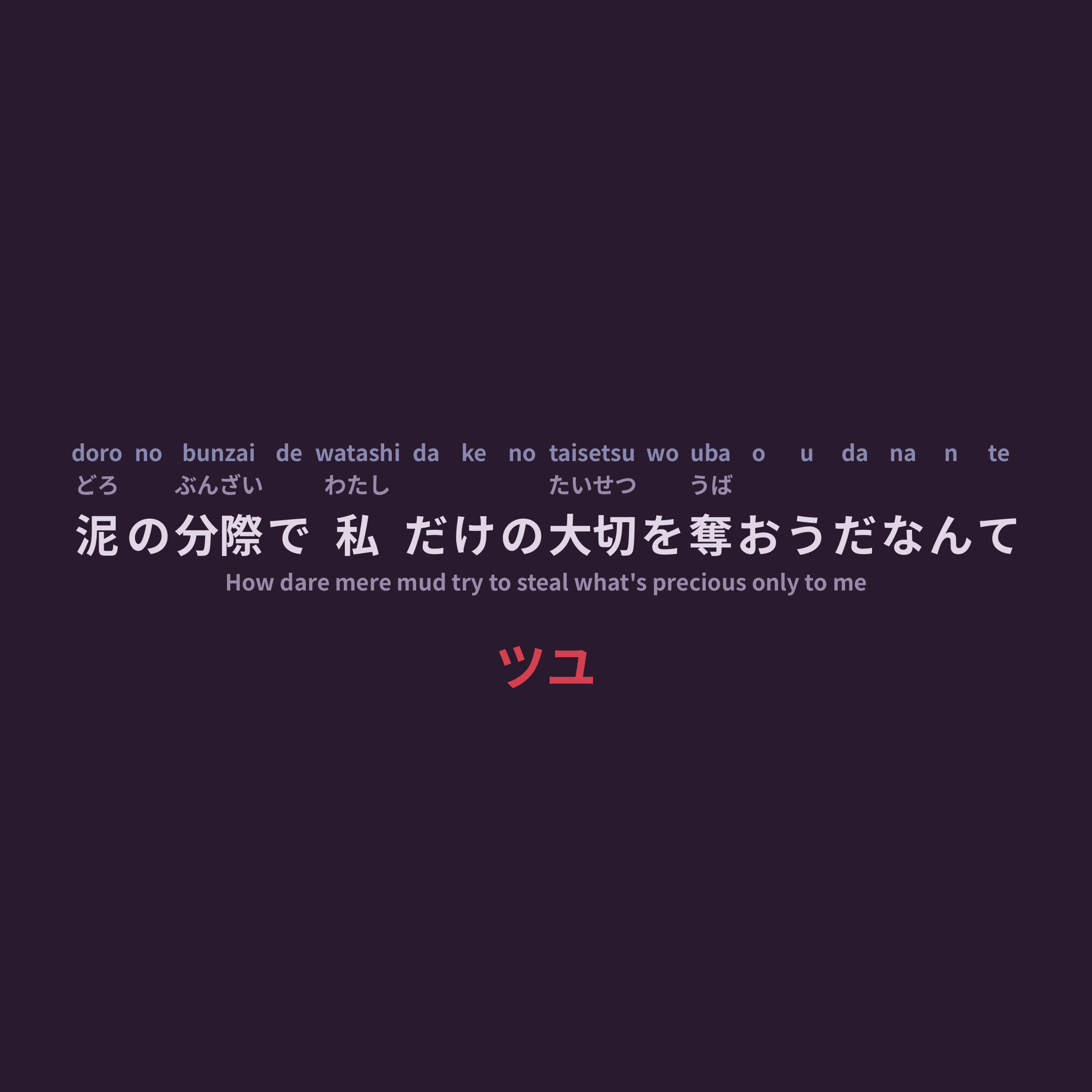
doro no bunzai de watashi dake no taisetsu wo ubaou da nante
泥の分際で私だけの大切を奪おうだなんて
How dare mere mud try to steal what's precious only to me
- 泥 /doro/:mud, dirt
- 分際 /bunzai/:status, standing (contemptuous; 'mere' or 'lowly')
- 大切 /taisetsu/:something precious, something important
- 奪おう /ubaou/:to try to steal; Original form: 奪う (volitional form)
- だなんて /da nante/:how dare; expresses disbelief or indignation
datte jimen no ue hatte
だって地面の上這って
Because you just crawl on the ground
- だって /datte/:because, after all
- 地面 /jimen/:ground, surface
- 上 /ue/:above, on top
- 這って /hatte/:to crawl; Original form: 這う
miageru koto shika nou ga nai kuse ni
見上げることしか能がないくせに
You who can do nothing but look up
- 見上げる /miageru/:to look up at
- しか...ない /shika...nai/:nothing but, only (restrictive)
- 能 /nou/:ability, talent
- くせに /kuse ni/:despite, even though (with contempt or dissatisfaction)
kono tsubasa no utsukushisa ni wa kanawanai no da kara
この翼の美しさには敵わないのだから
Because you can never match the beauty of these wings
- 翼 /tsubasa/:wings
- 美しさ /utsukushisa/:beauty (noun form of 美しい)
- 敵わない /kanawanai/:cannot match, no match for; Original form: 敵う
nani mo osorete nai no yo
何も恐れてないのよ
I'm not afraid of anything
- 何も /nani mo/:nothing (with negative), anything
- 恐れて /osorete/:to fear; Original form: 恐れる
nani mo osorete nai no ni
何も恐れてないのに
Even though I'm not afraid of anything
- 何も /nani mo/:nothing (with negative), anything
- 恐れて /osorete/:to fear; Original form: 恐れる
- のに /noni/:even though, despite (expresses regret or contradiction)
itai itai itai itai no yo
痛い 痛い 痛い 痛いのよ
It hurts, it hurts, it hurts, it hurts
- 痛い /itai/:painful, it hurts
ki no sei da ki no sei da ki no sei da
気のせいだ 気のせいだ 気のせいだ
It's just my imagination, just my imagination, just my imagination
- 気のせい /ki no sei/:one's imagination, just imagining things
aa mukuchi ni natte me mo awase nakunatte
あぁ無口になって目も合わせなくなって
Ah, I became silent and stopped making eye contact
- 無口 /mukuchi/:reticent, taciturn
- なって /natte/:to become; Original form: なる
- 目 /me/:eye
- 合わせ /awase/:to match, to meet (eyes); Original form: 合わせる
sore de kidzuite yo tte donkan na anata ni yotte
それで気づいてよって鈍感な貴方に酔って
Hoping you'd notice, intoxicated by your obliviousness
- それで /sore de/:and then, therefore
- 気づいて /kidzuite/:to notice; Original form: 気づく
- って /tte/:quotation particle (colloquial と)
- 鈍感 /donkan/:insensitive, dull
- 貴方 /anata/:you
- 酔って /yotte/:to be intoxicated; Original form: 酔う
kyori wo toru koto datte gyaku ni amaete mitatte
距離を取ることだって逆に甘えてみたって
Even keeping distance, even trying to act spoiled instead
- 距離 /kyori/:distance
- 取る /toru/:to take, to keep
- 逆 /gyaku/:reverse, opposite
- 甘えて /amaete/:to act spoiled, to depend on; Original form: 甘える
zenzen tsutawaru koto nakute zettai kirawaretaku wa nai no
全然伝わることなくて絶対嫌われたくはないの
It didn't get through at all — I absolutely don't want to be hated
- 全然 /zenzen/:not at all (with negative)
- 伝わる /tsutawaru/:to be conveyed, to be transmitted
- 絶対 /zettai/:absolutely
- 嫌われ /kiraware/:to be hated; Original form: 嫌う (passive form)
tsuyoku hidoku kitai shite
強く 酷く 期待して
Strongly, cruelly, expecting
- 強く /tsuyoku/:strongly; Original form: 強い
- 酷く /hidoku/:terribly, cruelly; Original form: 酷い
- 期待 /kitai/:expectation, hope
omoeba omou hodo ni aradate
想えば想う程に荒立って
The more I think, the more agitated I become
- 想えば /omoeba/:if one thinks; Original form: 想う (conditional form)
- 想う /omou/:to think of, to long for
- 程 /hodo/:the more... the more (degree)
- 荒立って /aradatte/:to get agitated, to flare up; Original form: 荒立つ
sou da zenbu aitsu no sei datte
そうだ全部彼奴のせいだって
That's right — it's all that person's fault
- そうだ /sou da/:that's right, exactly
- 全部 /zenbu/:everything, all
- 彼奴 /aitsu/:that guy/person (rude)
- せい /sei/:fault, blame
doro no bunzai de watashi dake no taisetsu wo ubaou da nante
泥の分際で私だけの大切を奪おうだなんて
How dare mere mud try to steal what's precious only to me
- 泥 /doro/:mud, dirt
- 分際 /bunzai/:status, standing (contemptuous)
- 大切 /taisetsu/:something precious, something important
- 奪おう /ubaou/:to try to steal; Original form: 奪う (volitional form)
- だなんて /da nante/:how dare; expresses disbelief
datte kigen tsuki no sei wo arigatagaru shika nou ga nai kuse ni
だって期限付きの生を有り難がるしか能が無いくせに
Because all you can do is be grateful for your limited life
- だって /datte/:because, after all
- 期限 /kigen/:deadline, time limit
- 付き /tsuki/:with, attached; Original form: 付く
- 生 /sei/:life
- 有り難がる /arigatagaru/:to feel/show gratitude; 有り難い + がる (to show signs of gratitude)
- 能 /nou/:ability, talent
- くせに /kuse ni/:despite, even though (with contempt)
kono tsubasa wa towa no saki made hateru koto nai kara
この翼は永遠の先まで果てること無いから
Because these wings will never end, even beyond eternity
- 翼 /tsubasa/:wings
- 永遠 /towa/:eternity, forever
- 先 /saki/:ahead, beyond
- 果てる /hateru/:to end, to expire
nani mo osorete nai no yo
何も恐れてないのよ
I'm not afraid of anything
- 何も /nani mo/:nothing (with negative)
- 恐れて /osorete/:to fear; Original form: 恐れる
nani mo osorete nai no ni
何も恐れてないのに
Even though I'm not afraid of anything
- 何も /nani mo/:nothing (with negative)
- 恐れて /osorete/:to fear; Original form: 恐れる
- のに /noni/:even though, despite
itai itai itai itai no yo
痛い 痛い 痛い 痛いのよ
It hurts, it hurts, it hurts, it hurts
- 痛い /itai/:painful, it hurts
ki no sei da ki no sei da ki no sei da
気のせいだ 気のせいだ 気のせいだ
It's just my imagination, just my imagination, just my imagination
- 気のせい /ki no sei/:one's imagination
tsuyoku amaku kitai shite
強く 甘く 期待して
Strongly, sweetly, expecting
- 強く /tsuyoku/:strongly; Original form: 強い
- 甘く /amaku/:sweetly; Original form: 甘い
- 期待 /kitai/:expectation, hope
waraeba warau hodo ni iradatte
笑えば笑うほどに苛立って
The more I laugh, the more irritated I become
- 笑えば /waraeba/:if one laughs; Original form: 笑う (conditional form)
- 笑う /warau/:to laugh, to smile
- ほど /hodo/:the more... the more
- 苛立って /iradatte/:to get irritated; Original form: 苛立つ
sou da zenbu aitsu no sei datte
そうだ全部彼奴のせいだって
That's right — it's all that person's fault
- そうだ /sou da/:that's right
- 全部 /zenbu/:everything, all
- 彼奴 /aitsu/:that guy/person (rude)
- せい /sei/:fault, blame
gomen nasai gomen nasai
ごめんなさい ごめんなさい
I'm sorry, I'm sorry
- ごめんなさい /gomen nasai/:I'm sorry
sono hitokoto sura nouri ni wa nakute
その一言すら脳裏には無くて
Not even that one word came to mind
- 一言 /hitokoto/:one word, a single remark
- すら /sura/:even (emphatic particle)
- 脳裏 /nouri/:mind, back of one's mind
- 無くて /nakute/:not existing; Original form: 無い
kiete yo kiete yo
消えてよ 消えてよ
Disappear, disappear
- 消えて /kiete/:to disappear; Original form: 消える
ima sugu ni soko kara satte shimatte yo
今すぐにそこから去ってしまってよ
Just leave from there right now
- 今 /ima/:now
- すぐに /sugu ni/:immediately
- そこ /soko/:there
- 去って /satte/:to leave; Original form: 去る
- しまって /shimatte/:indicates completion; Original form: しまう
itsu datte watashi dake no tokken da to
何時だって私だけの特権だと
It was always my exclusive privilege
- 何時だって /itsu datte/:always, no matter when
- 私 /watashi/:I, me
- だけ /dake/:only, just
- 特権 /tokken/:privilege
utagatta koto nai kara
疑ったこと無いから
I never once doubted it
- 疑った /utagatta/:doubted; Original form: 疑う
- 無い /nai/:not existing
doro no
泥の
Mud's...
- 泥 /doro/:mud, dirt
doro no bunzai de watashi dake no taisetsu wo ubaou da nante
泥の分際で私だけの大切を奪おうだなんて
How dare mere mud try to steal what's precious only to me
- 泥 /doro/:mud, dirt
- 分際 /bunzai/:status (contemptuous)
- 大切 /taisetsu/:something precious
- 奪おう /ubaou/:to try to steal; Original form: 奪う (volitional form)
- だなんて /da nante/:how dare; disbelief
datte jimen no ue hatte
だって地面の上這って
Because you just crawl on the ground
- だって /datte/:because, after all
- 地面 /jimen/:ground
- 上 /ue/:above, on top
- 這って /hatte/:to crawl; Original form: 這う
kegarawashii noni kawaigannai de yo
汚らわしいのに可愛がんないでよ
It's filthy, so don't you dare be sweet to it
- 汚らわしい /kegarawashii/:filthy, disgusting
- 可愛がる /kawaigaru/:to dote on, to cherish
- ないでよ /nai de yo/:don't... (request not to do something)
mite watashi wo anata ga homete kureta kono tsubasa wo
見て 私を 貴方が褒めてくれたこの翼を
Look — look at me, at these wings you once praised
- 見て /mite/:to look; Original form: 見る
- 私 /watashi/:I, me
- 貴方 /anata/:you
- 褒めて /homete/:to praise; Original form: 褒める
- くれた /kureta/:did (something) for me; Original form: くれる
- 翼 /tsubasa/:wings
kirei desho
綺麗でしょ
It's beautiful, isn't it?
- 綺麗 /kirei/:beautiful, pretty
- でしょ /desho/:right? isn't it? (seeking confirmation)
doro no bunzai ga erabarete watashi ga tsuihou da nante
泥の分際が選ばれて 私が追放だなんて
The mud was chosen and I'm the one banished — how can that be
- 泥 /doro/:mud, dirt
- 分際 /bunzai/:status (contemptuous)
- 選ばれて /erabarete/:to be chosen; Original form: 選ぶ (passive form)
- 私 /watashi/:I, me
- 追放 /tsuihou/:banishment, exile
- だなんて /da nante/:how can that be (disbelief)
zettai ni anata no sei yo
絶対に貴方のせいよ
It's absolutely your fault
- 絶対 /zettai/:absolutely
- 貴方 /anata/:you
- せい /sei/:fault, blame
nani ka no machigai nanda konna no wa ne
何かの間違いなんだこんなのはね
This must be some kind of mistake
- 何か /nani ka/:something, some kind of
- 間違い /machigai/:mistake, error
- こんな /konna/:this kind of, like this
"gomen nasai" sura mo
「ごめんなさい」すらも
Even a "sorry"
- ごめんなさい /gomen nasai/:I'm sorry
- すらも /sura mo/:even (stronger emphasis than すら)
todokanai hodo no hayasa de ochiteku
届かないほどの速さで堕ちてく
Falling at a speed where nothing can reach me
- 届かない /todokanai/:cannot reach; Original form: 届く
- ほど /hodo/:to the extent that
- 速さ /hayasa/:speed (noun form of 速い)
- 堕ちてく /ochiteku/:falling down; Original form: 堕ちる (colloquial ていく)
hontou ni ai shiteru
本当に愛してる
I truly love you
- 本当 /hontou/:truly, really
- 愛してる /ai shiteru/:I love (you); Original form: 愛する (colloquial している)
watashi dake no anata wo
私だけの貴方を
You who belong only to me
- 私 /watashi/:I, me
- だけ /dake/:only, just
- 貴方 /anata/:you
miren miren miren miren shika
未練 未練 未練 未練しか
Regret, regret, regret — nothing but regret
- 未練 /miren/:lingering attachment, regret
- しか /shika/:nothing but, only (with negative)
nokoranai konna ketsumatsu wo
残らないこんな結末を
An ending where nothing remains
- 残らない /nokoranai/:not remaining; Original form: 残る
- こんな /konna/:this kind of
- 結末 /ketsumatsu/:ending, conclusion
hangyakusha toshite seotte ikunda ne
反逆者として背負っていくんだね
I'll carry on bearing it as a traitor, won't I
- 反逆者 /hangyakusha/:rebel, traitor
- として /toshite/:as (in the role of)
- 背負って /seotte/:to bear, to carry on one's back; Original form: 背負う
- いくんだ /ikunda/:going to (colloquial のだ, expresses resolve or emotion)