kangaeta tte wakaranai shi
考えたってわからないし
Even if I think about it, I don't understand
- 考えた /kangaeta/:Thought (original form: 考える, to think)
- たって /tatte/:Even if (colloquial form of 「ても」)
- わからない /wakaranai/:Don't understand (original form: わかる, to understand)
- し /shi/:Particle for listing reasons
aozora no shita, kimi wo matta
青空の下、君を待った
Under the blue sky, I waited for you
- 青空 /aozora/:Blue sky
- 下 /shita/:Under, below
- 君 /kimi/:You
- 待った /matta/:Waited (original form: 待つ, to wait)
kaze ga fuita shougo, hirusagari wo nukedasu souzou
風が吹いた正午、昼下がりを抜け出す想像
At windy noon, I imagined escaping from the afternoon
- 風 /kaze/:Wind
- 吹いた /fuita/:Blew (original form: 吹く, to blow)
- 正午 /shougo/:Noon
- 昼下がり /hirusagari/:Afternoon
- 抜け出す /nukedasu/:To slip out, to escape
- 想像 /souzou/:Imagination
nee, korekara dou naru n darou ne
ねぇ、これからどうなるんだろうね
Hey, what will happen from now on?
- これから /korekara/:From now on
- どう /dou/:How
- なる /naru/:To become
- だろう /darou/:Probably (expresses conjecture)
susumekata osowaranai n da yo
進め方教わらないんだよ
No one ever taught me how to move forward
- 進め方 /susumekata/:How to proceed (verb stem + 方 means the way of doing something)
- 教わらない /osowaranai/:Not taught (original form: 教わる, to be taught)
kimi no me wo mita nani mo iezu boku wa aruita
君の目を見た 何も言えず僕は歩いた
Looking into your eyes, unable to say anything, I walked away
- 君 /kimi/:You
- 目 /me/:Eyes
- 見た /mita/:Looked (original form: 見る, to look)
- 何 /nani/:What, anything
- 言えず /iezu/:Unable to say (original form: 言う, to say. 「ず」is the literary negative form)
- 僕 /boku/:I (masculine)
- 歩いた /aruita/:Walked (original form: 歩く, to walk)
Instrumental
kangaeta tte wakaranai shi
考えたってわからないし
Even if I think about it, I don't understand
- 考えた /kangaeta/:Thought (original form: 考える, to think)
- たって /tatte/:Even if (colloquial form of 「ても」)
- わからない /wakaranai/:Don't understand (original form: わかる, to understand)
seishun nante tsumaranai shi
青春なんてつまらないし
Youth and all that is so boring
- 青春 /seishun/:Youth
- なんて /nante/:Things like... (dismissive)
- つまらない /tsumaranai/:Boring, dull
yameta hazu no piano, tsukue wo hiku kuse ga nukenai
辞めた筈のピアノ、机を弾く癖が抜けない
The piano I was supposed to have quit — I can't shake the habit of playing it on the desk
- 辞めた /yameta/:Quit (original form: 辞める, to quit)
- 筈 /hazu/:Should be, supposed to be
- ピアノ /piano/:Piano (English: piano)
- 机 /tsukue/:Desk
- 弾く /hiku/:To play (an instrument)
- 癖 /kuse/:Habit, quirk
- 抜けない /nukenai/:Cannot get rid of (original form: 抜ける, to come off, to be eliminated)
nee, shourai nani shiteru darou ne
ねぇ、将来何してるだろうね
Hey, what will I be doing in the future?
- 将来 /shourai/:Future
- 何 /nani/:What
- してる /shiteru/:Doing (original form: する, to do. Colloquial contraction of 「している」)
- だろう /darou/:Probably (expresses conjecture)
ongaku wa shitenai to ii ne
音楽はしてないといいね
I hope I'm not still doing music
- 音楽 /ongaku/:Music
- してない /shitenai/:Not doing (original form: する, to do. Colloquial contraction of 「していない」)
- といい /to ii/:It would be good if (expresses a wish)
komaranaide yo
困らないでよ
Don't make this hard for me
- 困らないで /komaranaide/:Don't trouble me (original form: 困る, to be troubled. 「ないで」means please don't)
kokoro no naka ni hitotsu sen wo hiite mo
心の中に一つ線を引いても
Even if I draw a line in my heart
- 心 /kokoro/:Heart
- 中 /naka/:Inside
- 一つ /hitotsu/:One
- 線 /sen/:Line
- 引いて /hiite/:Draw, pull (original form: 引く. 「線を引く」means to draw a line)
doushitemo kienakatta imasara nan da kara
どうしても消えなかった 今更なんだから
No matter what, it wouldn't disappear — it's too late now
- どうしても /doushitemo/:No matter what
- 消えなかった /kienakatta/:Didn't disappear (original form: 消える, to disappear)
- 今更 /imasara/:At this point, too late now
naa, mou omoidasu na
なぁ、もう思い出すな
Hey, stop reminiscing
- もう /mou/:Already, no more
- 思い出す /omoidasu/:To recall, to remember
- な /na/:Don't (verb + な expresses prohibition)
machigatteru n da yo
間違ってるんだよ
You're all wrong
- 間違ってる /machigatteru/:Wrong (original form: 間違う, to make a mistake. Colloquial contraction of 「間違っている」)
wakattenai yo, antara ningen mo
わかってないよ、あんたら人間も
You don't understand — you people too
- わかってない /wakattenai/:Don't understand (original form: わかる, to understand. Colloquial contraction of 「わかっていない」)
- あんたら /antara/:You people (plural of 「あんた」, a rough way to say you)
- 人間 /ningen/:Human, people
hontou mo ai mo sekai mo kurushisa mo jinsei mo dou demo ii yo
本当も愛も世界も苦しさも人生もどうでもいいよ
Truth, love, the world, suffering, life — none of it matters
- 本当 /hontou/:Truth, reality
- 愛 /ai/:Love
- 世界 /sekai/:World
- 苦しさ /kurushisa/:Suffering (noun form of 苦しい)
- 人生 /jinsei/:Life
- どうでもいい /dou demo ii/:Don't care, doesn't matter
tadashii ka dou ka shiritai no datte bouei honnou da
正しいかどうか知りたいのだって防衛本能だ
Wanting to know if I'm right — even that is just a defense mechanism
- 正しい /tadashii/:Correct, right
- かどうか /ka dou ka/:Whether or not
- 知りたい /shiritai/:Want to know (original form: 知る, to know. 「たい」expresses desire)
- だって /datte/:Even that
- 防衛 /bouei/:Defense
- 本能 /honnou/:Instinct
kangaeta n da anta no sei da
考えたんだ あんたのせいだ
I thought about it — it's all your fault
- 考えた /kangaeta/:Thought (original form: 考える, to think)
- あんた /anta/:You (rough, informal)
- せい /sei/:Fault, blame (「〜のせい」means it's because of...)
Instrumental
kangaeta tte wakaranai ga
考えたってわからないが
Even if I think about it, I don't understand
- 考えた /kangaeta/:Thought (original form: 考える, to think)
- わからない /wakaranai/:Don't understand (original form: わかる, to understand)
hontou ni toshioitakunai n da
本当に年老いたくないんだ
I really don't want to grow old
- 本当 /hontou/:Really, truly
- 年老いたくない /toshioitakunai/:Don't want to grow old (original form: 年老いる, to age. 「たくない」expresses not wanting to)
itsuka shindara tte
いつか死んだらって
Thinking about dying someday
- いつか /itsuka/:Someday
- 死んだら /shindara/:If I die (original form: 死ぬ, to die. 「たら」expresses a hypothetical condition)
omou dake de mune ga karappo ni naru n da
思うだけで胸が空っぽになるんだ
Just thinking about it makes my chest feel empty
- 思う /omou/:To think
- だけ /dake/:Just, only
- 胸 /mune/:Chest, heart
- 空っぽ /karappo/:Empty
- なる /naru/:To become
shourai nani shiteru darou tte
将来何してるだろうって
Thinking about what I'll be doing in the future
- 将来 /shourai/:Future
- 何 /nani/:What
- してる /shiteru/:Doing (original form: する, to do)
- だろう /darou/:Probably (expresses conjecture)
otona ni nattara wakatta yo
大人になったらわかったよ
"You'll understand once you're an adult"
- 大人 /otona/:Adult
- なったら /nattara/:When one becomes (original form: なる, to become. 「たら」expresses condition)
- わかった /wakatta/:Understood (original form: わかる, to understand)
nan mo shitenai sa
何もしてないさ
I haven't done anything
- 何 /nan/:What, anything
- してない /shitenai/:Not doing (original form: する, to do. Colloquial contraction of 「していない」)
shiawase na kao shita hito ga nikui no wa
幸せな顔した人が憎いのは
The reason I resent people who look happy
- 幸せ /shiawase/:Happiness, happy
- 顔 /kao/:Face
- した /shita/:Made (original form: する, to do. Here means making a certain expression)
- 人 /hito/:Person
- 憎い /nikui/:Hateful, envious
dou warikittara ii n da
どう割り切ったらいいんだ
How can I come to terms with it?
- どう /dou/:How
- 割り切ったら /warikittara/:If one comes to terms with it (original form: 割り切る, to come to terms with, to rationalize)
- いい /ii/:Good (「どう〜たらいい」means what should one do)
mitasarenai atama no oku no
満たされない頭の奥の
The unsatisfied depths of my mind
- 満たされない /mitasarenai/:Unsatisfied (original form: 満たす, to satisfy. Passive negative form)
- 頭 /atama/:Head, mind
- 奥 /oku/:Depths, deep inside
bakemono mitai na rettoukan
化け物みたいな劣等感
An inferiority complex like a monster
- 化け物 /bakemono/:Monster
- みたい /mitai/:Like, resembling
- 劣等感 /rettoukan/:Inferiority complex
machigattenai yo
間違ってないよ
I'm not wrong
- 間違ってない /machigattenai/:Not wrong (original form: 間違う, to make a mistake. Colloquial contraction of 「間違っていない」)
naa, nandakanda antara ningen da
なぁ、何だかんだあんたら人間だ
Hey, when it comes down to it, you people are human too
- 何だかんだ /nandakanda/:When all is said and done
- あんたら /antara/:You people (rough, informal plural)
- 人間 /ningen/:Human, people
ai mo sukui mo yasashisa mo konkyo ga nai nante kimi ga warui yo
愛も救いも優しさも根拠がないなんて気味が悪いよ
Love, salvation, kindness — how unsettling that they have no basis
- 愛 /ai/:Love
- 救い /sukui/:Salvation (original form: 救う, to save)
- 優しさ /yasashisa/:Kindness (noun form of 優しい)
- 根拠 /konkyo/:Basis, evidence
- ない /nai/:None, not exist
- なんて /nante/:How... (expresses surprise or contempt)
- 気味が悪い /kimi ga warui/:Unsettling, creepy
rabusongu nanka ga itai no datte bouei honnou da
ラブソングなんかが痛いのだって防衛本能だ
Finding love songs painful — even that is just a defense mechanism
- ラブソング /rabusongu/:Love song (English: love song)
- なんか /nanka/:Things like (dismissive)
- 痛い /itai/:Painful
- だって /datte/:Even that
- 防衛 /bouei/:Defense
- 本能 /honnou/:Instinct
dou demo ii ka anta no sei da
どうでもいいか あんたのせいだ
It doesn't matter anymore — it's all your fault
- どうでもいい /dou demo ii/:Don't care, doesn't matter
- あんた /anta/:You (rough, informal)
- せい /sei/:Fault, blame (「〜のせい」means it's because of...)
Instrumental
kangaeta tte wakaranai shi
考えたってわからないし
Even if I think about it, I don't understand
- 考えた /kangaeta/:Thought (original form: 考える, to think)
- わからない /wakaranai/:Don't understand (original form: わかる, to understand)
ikiteru dake demo kurushii shi
生きてるだけでも苦しいし
Just being alive is painful
- 生きてる /ikiteru/:Being alive (original form: 生きる, to live. Colloquial contraction of 「生きている」)
- だけ /dake/:Just, only
- 苦しい /kurushii/:Painful, agonizing
ongaku toka moukaranai shi
音楽とか儲からないし
Music doesn't even make money
- 音楽 /ongaku/:Music
- とか /toka/:Things like
- 儲からない /moukaranai/:Doesn't make money (original form: 儲かる, to be profitable)
kashi toka tekitou demo ii yo
歌詞とか適当でもいいよ
Lyrics can just be written carelessly
- 歌詞 /kashi/:Lyrics
- とか /toka/:Things like
- 適当 /tekitou/:Careless, half-hearted
- いい /ii/:Fine, okay
dou demo ii n da
どうでもいいんだ
I don't care anymore
- どうでもいい /dou demo ii/:Don't care, doesn't matter
machigattenai daro
間違ってないだろ
I'm not wrong, right?
- 間違ってない /machigattenai/:Not wrong (original form: 間違う, to make a mistake)
- だろ /daro/:Right? (colloquial contraction of 「だろう」, seeking confirmation)
machigattenai yo na
間違ってないよな
I'm not wrong
- 間違ってない /machigattenai/:Not wrong (original form: 間違う, to make a mistake)
machigattenai yo na...
間違ってないよな...
I'm not wrong...
- 間違ってない /machigattenai/:Not wrong (original form: 間違う, to make a mistake)
Instrumental
machigatteru n da yo wakatteru n da
間違ってるんだよ わかってるんだ
I am wrong — I know that
- 間違ってる /machigatteru/:Wrong (original form: 間違う, to make a mistake)
- わかってる /wakatteru/:I know (original form: わかる, to understand. Colloquial contraction of 「わかっている」)
antara ningen mo
あんたら人間も
You people too
- あんたら /antara/:You people (rough, informal plural)
- 人間 /ningen/:Human, people
hontou mo ai mo sukui mo yasashisa mo jinsei mo dou demo ii n da
本当も愛も救いも優しさも人生もどうでもいいんだ
Truth, love, salvation, kindness, life — none of it matters anymore
- 本当 /hontou/:Truth, reality
- 愛 /ai/:Love
- 救い /sukui/:Salvation (original form: 救う, to save)
- 優しさ /yasashisa/:Kindness (noun form of 優しい)
- 人生 /jinsei/:Life
- どうでもいい /dou demo ii/:Don't care, doesn't matter
tadashii kotae ga ienai no datte bouei honnou da
正しい答えが言えないのだって防衛本能だ
Being unable to say the right answer — even that is just a defense mechanism
- 正しい /tadashii/:Correct, right
- 答え /kotae/:Answer
- 言えない /ienai/:Cannot say (original form: 言う, to say. Negative potential form)
- だって /datte/:Even that
- 防衛 /bouei/:Defense
- 本能 /honnou/:Instinct
dou demo ii ya anta no sei da
どうでもいいや あんたのせいだ
It doesn't matter anymore — it's all your fault
- どうでもいい /dou demo ii/:Don't care, doesn't matter
- あんた /anta/:You (rough, informal)
- せい /sei/:Fault, blame (「〜のせい」means it's because of...)
Instrumental
boku datte shinnen ga atta
僕だって信念があった
Even I once had conviction
- 僕 /boku/:I (masculine)
- だって /datte/:Even (「僕だって」means even I)
- 信念 /shinnen/:Conviction, belief
- あった /atta/:Had, existed (original form: ある, to exist. Past tense)
ima ja gomi mitai na omoi da
今じゃ塵みたいな想いだ
Now they're feelings like dust
- 今 /ima/:Now
- じゃ /ja/:Colloquial form of 「では」
- 塵 /gomi/:Trash, garbage
- みたい /mitai/:Like, resembling
- 想い /omoi/:Feelings, emotions
nando demo kimi wo kaita
何度でも君を書いた
No matter how many times, I kept writing about you
- 何度 /nando/:How many times
- でも /demo/:No matter (「何度でも」means no matter how many times)
- 君 /kimi/:You
- 書いた /kaita/:Wrote (original form: 書く, to write)
ureru koto koso ga dou demo yokatta n da
売れることこそがどうでもよかったんだ
Whether it sells or not — that truly didn't matter
- 売れる /ureru/:To sell well
- こと /koto/:Thing (nominalizer)
- こそ /koso/:Precisely, exactly (emphasis particle)
- どうでもよかった /dou demo yokatta/:Didn't matter (past tense of 「どうでもいい」)
hontou da hontou nan da
本当だ 本当なんだ
It's true — really true
- 本当 /hontou/:True, really
mukashi wa sou datta
昔はそうだった
That's how it used to be
- 昔 /mukashi/:The past, long ago
- そう /sou/:So, like that
- だった /datta/:Was (past tense of 「だ」)
dakara boku wa
だから僕は
That's why I
- だから /dakara/:That's why, therefore
- 僕 /boku/:I (masculine)
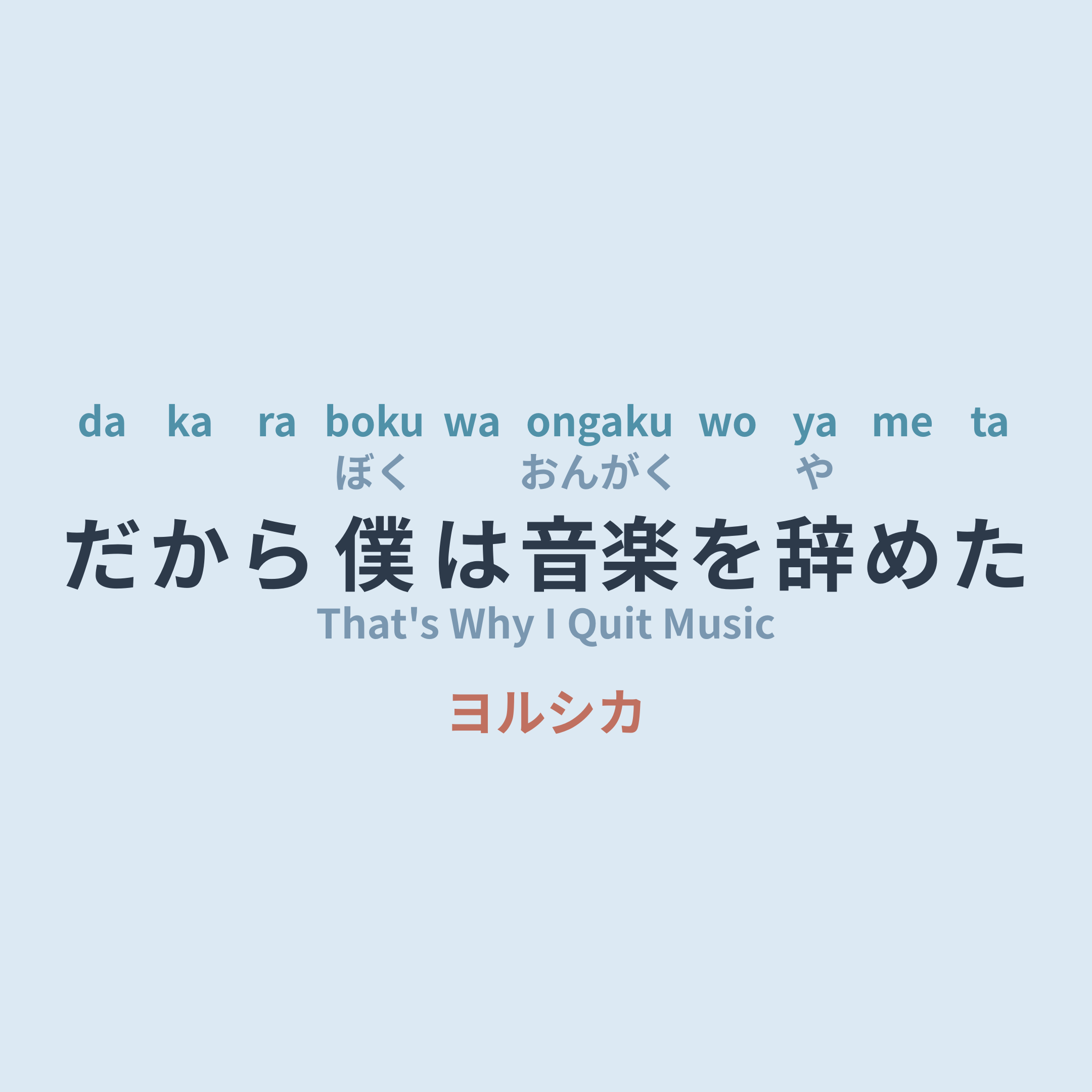
dakara boku wa ongaku wo yameta
だから僕は音楽を辞めた
That's why I quit music
- だから /dakara/:That's why, therefore
- 僕 /boku/:I (masculine)
- 音楽 /ongaku/:Music
- 辞めた /yameta/:Quit (original form: 辞める, to quit)